
Selecting the right floating dock system takes more research than most waterfront owners expect. FloatBricks is getting a lot of buzz online, but it’s nowhere near the only modular dock solution worth looking at in 2026.
Buyers often get stuck on:
- Some systems are fine for personal watercraft, but not for larger vessels.
- Not every modular dock is built to handle commercial use.
- Expansion flexibility varies quite a bit between suppliers and product lines.
Modular Docking works with recreational and commercial users across Australia who need adaptable solutions for floating docks in Australia that can grow with their waterfront requirements. This guide compares the key alternatives and covers what buyers should look at before committing to a system.
The top alternatives to FloatBricks in Australia are determined based on vessel type, site conditions, future growth and whether the use is for recreation or business. A quality floating dock in Australia should offer stability, modular flexibility, durable marine-grade materials, and long-term value. Top suppliers such as Modular Docking operate across the Australian market with solutions suitable for both private and commercial waterfront projects.
Why Do Buyers Look For A FloatBricks Alternative In Australia?
Most buyers comparing alternatives are not unhappy with FloatBricks. They are simply doing their research before spending money on a system they may need to live with for years.
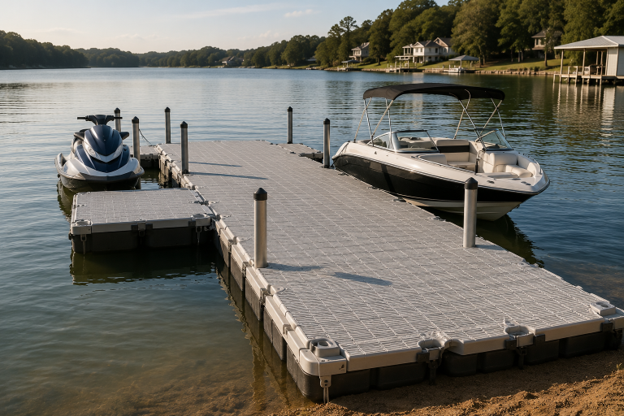
FloatBricks is a modular HDPE docking system built around Jet Skis, small boats, floating platforms, and walkways. Its tile-based design allows users to assemble custom layouts, which is appropriate for simple residential applications. That said, buyers often make their choice across options based on the following:
- Vessel size and weight requirements.
- Commercial or high-traffic use needs.
- Local availability and ongoing support.
- Future expansion and reconfiguration plans.
This is what drives continued interest in a floatbricks alternative in Australia among buyers who want to match a system to their actual situation rather than settle for the most familiar name.
Which Features Matter Most When Comparing Dock Systems?
The right dock system is the one that fits your application, not the one with the most name recognition. A jet ski floating dock typically needs quick drive-on access and reliable hull protection. A marina operator or commercial site has different priorities, often requiring heavy-duty modular sections that can handle multiple users, equipment loads, and regular wear.
One factor that regularly gets overlooked is whether a system can be expanded later without pulling out the original structure. Buyers who start with a single vessel often find their needs grow within a few years. Walkways, additional berths, and recreational platforms become relevant sooner than expected. Assessing expansion capability upfront saves a costly rethink down the track.
Build A Flexible Dock That Grows With Your Requirements
Which Alternatives Are Available In Australia?
There are a number of different suppliers of modular docking in the Australian market, each with a distinct focus. FloatBricks is specialised in modular HDPE systems for PWCs, small crafts, floating walkways and recreational platforms.
Marine Structures provides modular polythene dock systems for residential and commercial use that can be reconfigured as layouts change over time. Floating Docks in Australia offers modular floating block systems for boats, Jet Skis, pontoons and general waterfront access.
Modular Docking provides customisable marine infrastructure to suit boats, personal watercraft, access systems, platforms and commercial projects of any size.
Which System Works Best For Commercial Applications?
Commercial users need more than basic vessel storage, and not every modular dock system is built to deliver it.
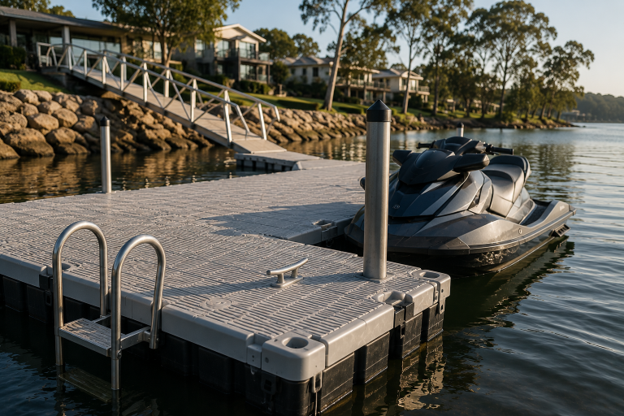
A commercial floating dock in Australia might be used for bridge maintenance, marine construction, public waterfront access, events, or geotechnical work. In those environments, load capacity, site adaptability, and the ability to expand the system as requirements shift tend to matter far more than upfront cost alone.
Commercial buyers are better served by evaluating:
- Load-bearing requirements across the full structure.
- Site-specific conditions including wave exposure and tidal range.
- Access and safety needs for workers or the public.
- Expansion capability as project scope changes.
- Maintenance commitments over the system’s working life.
How Important Is Long-Term Flexibility When Choosing A Dock?
Flexibility often becomes the deciding factor once buyers think beyond the immediate install.
A modular boat dock in Australia should support requirements that change over time. A single-vessel setup today may need additional berthing, wider access points, or a connected recreational platform within a few seasons. Building that growth potential into the original purchase avoids the expense of starting again from scratch.
The same logic applies to a floating walkway in Australia. Marina layouts shift, event spaces get reconfigured, and waterfront developments expand. A dock system that cannot adapt to those changes tends to become a liability rather than an asset.
Compare Dock Systems Before Making Your Final Decision
Conclusion
Choosing the right FloatBricks alternative comes down to how the dock will actually be used, not which brand has the loudest presence online. Vessel type, site conditions, commercial requirements, and long-term expansion plans all shape what the right system looks like in practice.
As a provider of floating dock in Australia, Modular Docking brings hands-on experience across both recreational and commercial waterfront projects. That background helps clients work through practical options based on real operational needs. Get in touch with our team to talk through the right fit for your project.
FAQs
Do I Need A Permit For A Floating Dock In Australia?
Permit requirements vary with your state, local council, waterway authority and type of installation. Temporary structures can be treated differently than permanent structures. Always consult with the proper local authorities before commencing any installation work at your waterfront location.
Can A Modular Dock Be Relocated To A Different Property?
Yes, in most cases. Modular systems are often disassembled, transported and reassembled into a new configuration at a different site. This makes them a practical choice for property owners, marina operators and organisations who expect their waterfront requirements to change over time.
Are Modular Floating Docks Suitable For Saltwater Environments?
Most modern modular dock systems use UV stabilised and marine-grade materials which are well-suited to handle saltwater exposure. Performance still depends on the quality of design, installation, wave conditions and how consistently the system is maintained. Always check material specs carefully before you procure it for a saltwater site.
How Long Does A Modular Dock System Typically Last?
The service life depends on the quality of the material used, environmental exposure, the intensity of use and the maintenance. Well-made polythene and HDPE systems are built for long-term marine use and will work reliably for many years if they are installed correctly and maintained during their working life.